

Sportsbook Deposit and Withdrawal Methods in Canada
Bodog’s deposit and withdrawal methods guide for Canada in 2026. Compare betting site banking methods by speed, fees, and payout times.

Sportsbook deposit and withdrawal methods in Canada fall into six distinct categories: debit and credit cards, bank transfers, e-wallets, prepaid cards, cryptocurrency, and cash or in-person options.
Choosing the right one determines how fast you get paid, how much you lose to fees, and whether your payout actually lands where you expect it. Deposits at licensed Canadian sportsbooks are almost always instant; withdrawals are not, and that gap is deliberate.
Sportsbook Payment Options
Before you fund your first bet, you need a clear map of the territory. Each of the sportsbook payment options serve a different purpose, and knowing which category does what will save you from a genuinely unpleasant surprise when you try to cash out. Availability shifts by operator and by province, so what's on offer at one licensed sportsbook may not exist at another.
Here's the category breakdown every Canadian bettor should know:
- Debit and credit cards — Visa and Mastercard are widely recognized for deposits, though withdrawals back to cards can be inconsistent depending on the operator and typically take 3–5 business days when available.
- Bank transfers and EFT — includes ACH, wire transfers, and Interac e-Transfer, which is widely regarded as a top choice for Canadian players, particularly those using operators regulated by iGaming Ontario (the provincial body that oversees legal online gambling in Ontario). Reliable for both deposits and withdrawals, though wire fees can sting.
- E-wallets — PayPal, Skrill, and Neteller sit in the fastest lane for payouts, with many operators processing e-wallet withdrawals within 24–48 hours, though actual times vary by platform and verification status. They require a separate account and sometimes disqualify you from welcome bonuses.
- Prepaid cards — Paysafecard is deposit-only. Full stop. Don't expect your winnings to land back on it.
- Cryptocurrency — Bitcoin and Ethereum offer speed and privacy, with no bank intermediary. The trade-off is price volatility between deposit and withdrawal.
- Cash and in-person options — casino cashier deposits and cash-to-crypto kiosks exist for players who prefer to stay offline.
That last point about prepaid cards is the non-obvious rule most guides bury: some methods are deposit-only. The option you used to deposit funds into your account may not be eligible to receive money when you withdraw funds from every online sportsbook. Always confirm withdrawal eligibility before depositing.
It's also worth understanding the regulatory landscape before you pick a method. iGaming Ontario is the market-conduct body that operates the legal online gambling framework in Ontario, working alongside the Alcohol and Gaming Commission of Ontario (AGCO), the provincial regulator responsible for licensing and compliance. Operators regulated under this framework are held to strict standards around payment processing, credit and debit cards, identity verification, and responsible gambling tools. That regulatory structure directly shapes which banking methods are available, how quickly withdrawals are processed, and what protections you have if something goes wrong.
Sportsbooks with Fast and Reliable Banking Methods


FanDuel combines a large North American betting footprint with a sportsbook built around quick in-play wagering, player props and multi-leg bets.
One of the market’s most intuitive Same-Game Parlay and live-betting experiences.
The app can feel busy for bettors who prefer a simpler, stripped-back sportsbook.
Pros And Cons
- Supports Interac, PayPal and major payment cards
- Most deposits appear in your account immediately
- Multiple withdrawal choices
- Withdrawals can take up to 5 days (depending on the method)
- Additional verification may delay a first or large withdrawal
- Supports Interac, PayPal and major payment cards
- Most deposits appear in your account immediately
- Multiple withdrawal choices
- Withdrawals can take up to 5 days (depending on the method)
- Additional verification may delay a first or large withdrawal
FanDuel supports the payment methods most Ontario bettors are likely to use, including Interac, PayPal, Visa, Mastercard and online banking. Deposits are generally quick, while withdrawal speed depends on the method, account verification and any additional security review.
Remember: FanDuel is only available to Canadians living in Ontario or Alberta.


TonyBet is an international sportsbook with separate Canadian products. In Ontario, it operates as an iGaming Ontario-approved sportsbook through Ligtip Limited; players elsewhere should check the separate product and local rules.
Strong hockey coverage including CHL and international events
Mobile app rating isn't as high as some of the market leaders
Pros And Cons
- Interac is available
- Supports Visa, Mastercard and MuchBetter
- Deposits are credited quickly
- PayPal is not supported
- Smaller payment selection some other brands
- Interac is available
- Supports Visa, Mastercard and MuchBetter
- Deposits are credited quickly
- PayPal is not supported
- Smaller payment selection some other brands
TonyBet keeps its cashier relatively simple. Interac, payment cards and MuchBetter cover the main deposit options for new Canadian customers. Interac is the most convenient option for most users, and it's available. The omission of PayPal and a few alternative wallets is worth considering.

DraftKings is a North American digital gaming company whose sportsbook is known for wide event coverage, detailed player markets and a feature-heavy mobile experience.
Strong player-prop and Same Game Parlay functionality around major sports
Its pricing is not consistently the strongest for line shoppers
Pros And Cons
- Interac, PayPal and major cards are supported
- Card withdrawals usually completed within 24 hours
- Most withdrawal methods have a $1 minimum
- No direct online banking or wire-transfer deposit option
- A qualifying deposit is needed before Interac and PayPal withdrawals are permitted
- Interac, PayPal and major cards are supported
- Card withdrawals usually completed within 24 hours
- Most withdrawal methods have a $1 minimum
- No direct online banking or wire-transfer deposit option
- A qualifying deposit is needed before Interac and PayPal withdrawals are permitted
DraftKings accepts Interac, PayPal and Visa, Mastercard, Discover and American Express cards in Ontario. Card withdrawals are normally the quickest option, while Interac usually takes one to three days and PayPal can take several days.
Remember: DraftKings is only available to Canadians living in Alberta or Ontario.


ToonieBet gives Ontario bettors a locally tailored sportsbook and casino, with live action, broad event coverage and a modern app.
Gamified experience with unusually large monthly live-event slate
Shorter track record than most of its competition
Pros And Cons
- Supports Interac, PayPal, and several e-wallets
- Deposits are normally processed instantly
- $10 minimum available through select methods
- Mastercard and Apple Pay do not support withdrawals
- Final payout speed depends on approval and payment provider
- Supports Interac, PayPal, and several e-wallets
- Deposits are normally processed instantly
- $10 minimum available through select methods
- Mastercard and Apple Pay do not support withdrawals
- Final payout speed depends on approval and payment provider
ToonieBet offers one of the broader payment selections, including Interac, PayPal, Visa, MuchBetter and Skrill. Users should choose carefully because some deposit methods, including Mastercard and Apple Pay, cannot be used to receive withdrawals.

BetMGM pairs a regulated online sportsbook with the reach of MGM Resorts and Entain, giving the brand a different foundation from sportsbook-first competitors.
Integrated GameSense tools make responsible-play resources easier to find and use.
Product features and rewards can vary considerably by state, province and local licensing rules.
Pros And Cons
- Cards, bank transfers and digital wallets all accepted
- Supports Interac, PayPal and Apple Pay
- Transactions are processed in Canadian dollars
- Not all deposit methods can be used for withdrawals
- Withdrawal timing varies by banking method
- Cards, bank transfers and digital wallets all accepted
- Supports Interac, PayPal and Apple Pay
- Transactions are processed in Canadian dollars
- Not all deposit methods can be used for withdrawals
- Withdrawal timing varies by banking method
BetMGM gives Ontario sportsbook users several ways to fund an account, including Interac, PayPal, Apple Pay, Visa, Mastercard and online banking. Electronic methods can produce quicker payouts, but first-time withdrawals and closed-loop payment checks may add processing time.
Remember: BetMGM is only available to Canadian sports bettors in Ontario or Alberta.


LeoVegas is an Ontario-regulated sportsbook and casino known for its polished mobile app, broad sports coverage and live-betting tools.
Award-winning mobile app
Brand caters to casino players more than sports bettors
Pros And Cons
- Supports Interac deposits
- Visa, Mastercard and MuchBetter are available
- LeoVegas does not charge withdrawal fees
- Bank transfers can take 5 to 7 days
- NeoSurf and some prepaid options are deposit only
- Supports Interac deposits
- Visa, Mastercard and MuchBetter are available
- LeoVegas does not charge withdrawal fees
- Bank transfers can take 5 to 7 days
- NeoSurf and some prepaid options are deposit only
LeoVegas supports familiar Ontario payment methods, including Interac, cards, MuchBetter and bank transfers. Interac is generally the most convenient all-purpose option, while prepaid cards and slower bank transfers are less suitable for users prioritizing withdrawals.
The Four Factors That Should Drive Your Betting Banking Decision
Betting site payment methods involve trade-offs across four dimensions. Treat these as competing priorities, not a checklist where every box gets ticked simultaneously:
- Speed — e-wallets and crypto move fastest; bank wires move slowest.
- Fees — most sportsbooks absorb deposit fees, but wire transfers can carry $15–$50 in provider-side charges.
- Security — all licensed operators use encryption and regulated payment rails; e-wallets add a useful layer of separation between your bank and the sportsbook.
- Availability — regulated under iGaming Ontario? Expect Interac e-Transfer prominently. Playing elsewhere in Canada? Your options may differ.
Understanding these four factors upfront prevents the most common mistake Canadian bettors make: choosing betting site payment methods based on convenience at sign-up, then discovering it's the slowest or most expensive option when it's time to withdraw. The method that gets your money in fastest is not always the method that gets your money out fastest, and that asymmetry is worth planning around before you deposit a dollar.
Quick-Reference: Betting Site Payment Methods at a Glance
Use this table to set baseline expectations before diving into the details on each method:
| Method Type | Deposit | Withdrawal | Speed |
|---|---|---|---|
| Debit / Credit Cards | Yes | Sometimes | Instant deposit / 3–5 days out |
| Interac e-Transfer | Yes | Yes | Fast (often under 24h) |
| E-Wallets | Yes | Yes | Fast (24–48h typical) |
| Bank / Wire Transfer | Yes | Yes | Slow (3–7 days) |
| Prepaid Cards | Yes | No | Instant deposit only |
| Cryptocurrency | Yes | Yes | Very fast (1–24h |
| Cash / In-Person | Yes | Limited | Varies |
How Deposits Work at Canadian Sportsbooks
Deposits at licensed Canadian sportsbooks are the straightforward half of the equation. They are almost always instant, rarely complicated, and supported across a wide range of payment methods. The less obvious reality is that three separate parties are involved in every transaction: the sportsbook, your bank or payment provider, and sometimes a third-party processor. When something goes wrong, knowing which one dropped the ball saves you a frustrating loop of support tickets.
Step-by-Step Deposit Process When You Bet Online
Whether you're on the BetMGM app or the DraftKings mobile site, the deposit flow is essentially identical. Here's how it works on mobile:
- Open the sportsbook app and tap your account icon to access the cashier
- Select Deposit from the menu
- Choose your preferred payment method (Interac e-Transfer, Visa, PayPal, etc.)
- Enter your deposit amount — minimums typically run $10–$20 CAD, depending on the method
- Confirm the transaction and wait for the funds to appear in your betting balance — usually within seconds
Most sportsbooks don't charge deposit fees on their end. However, your bank or payment provider might — particularly for credit card transactions, which some Canadian banks classify as cash advances and charge accordingly. Always check your card's terms before using it to fund a betting account. This is one of the most common hidden costs in sports betting and banking, and it catches new bettors off guard more often than any other fee.
It's also worth noting that deposit minimums vary by method. Interac e-Transfer and card deposits typically start at $10–$20 CAD, while wire transfers may require a higher minimum due to the fixed fees involved. Maximum deposit limits also differ — prepaid cards are capped by the card's loaded value, while bank transfers and e-wallets often support much higher transaction ceilings. Always check the cashier section of your specific sportsbook for current limits, as these can change with operator policy updates.
Betting Deposits: Fees, Limits, and Processing Times
| Method | Deposit Speed | Withdrawal Speed | Typical Fees | Deposit Limit (approx.) |
|---|---|---|---|---|
| Interac e-Transfer | Instant | 1–3 business days | None | $10–$10,000 CAD |
| Visa / Mastercard | Instant | 3–5 days | Low (possible cash advance) | $10–$5,000 CAD |
| PayPal / Skrill / Neteller | Instant | 24–48 hours (varies by platform) | Low | Varies by account |
| Bank Transfer / Wire | 1–3 business days | 3–7 days | $15–$50 per transfer | High (no standard cap) |
Why Deposits Get Declined — and How to Fix It
A declined deposit isn't always the sportsbook's fault. Here are the most common culprits and how to resolve each one without spiralling into a support ticket queue:
- Bank gambling block: Many Canadian banks flag online gambling transactions by default. Call your bank, confirm you're authorizing the transaction, or switch to Interac e-Transfer to bypass the block entirely.
- Mismatched account name: The payment method must be registered in your own name. Using a family member's card or account will get the deposit rejected — and may trigger a compliance flag on your betting account.
- 3D Secure (3DS) verification failure: Some Visa and Mastercard deposits require a one-time passcode sent to your phone. If it doesn't arrive, check your spam folder or update your mobile number with your bank.
- Daily or weekly deposit limit reached: Licensed sportsbooks operating under iGaming Ontario are required to provide players with the option to set deposit limits as part of their responsible gambling obligations. If you've hit your limit, you'll need to wait for it to reset or adjust it through your account settings.
- Insufficient funds or expired card: Check your balance and card expiry before blaming the sportsbook. It sounds obvious, but it's still the number one reason deposits fail.
Deposits should always come from a payment account registered in your own name. This is not bureaucratic pedantry — it is a standard anti-money laundering (AML) practice enforced across regulated iGaming Ontario operators by the AGCO. The AGCO is Ontario's provincial gaming regulator, responsible for licensing operators and setting the compliance standards that govern everything from payment processing to responsible gambling tools. Using a payment method that doesn't match your account name is a reliable way to trigger a compliance review and delay your access to funds.
Fastest Sportsbook Withdrawal Methods in 2026
Withdrawals are slower than deposits — and that's by design, not accident. Deposits are fast because the sportsbook wants your money immediately. Withdrawals are slower because the operator must verify your identity, check for fraud, run responsible gaming reviews, and only then hand your funds off to a payment provider. Every one of those steps takes time, and they happen in sequence, not simultaneously. Understanding this structure is the first step to managing your expectations — and speeding up your payouts.
What Is a Processing Window and Why Does It Matter?
Before your money moves anywhere, the sportsbook applies an internal review period known as a processing window. This is the operator's own clock — during which your withdrawal sits in a queue being checked against fraud rules, wagering requirements, and identity verification status. The payment provider's timeline doesn't even start until this window closes.
Processing window durations vary by operator. Some platforms, particularly those with more automated verification systems, may approve withdrawals within a few hours. Others may take longer depending on the volume of requests, the payment method selected, and whether your KYC (Know Your Customer) verification is already complete. That's why total payout times are always longer than advertised deposit speeds: you're waiting on two separate clocks, not one. Always factor in both the operator window and the provider settlement time when estimating when your funds will arrive.
Withdrawal Processing Times by Method
The table below shows conservative ranges based on typical operator and provider behaviour. Actual times vary by sportsbook, bank, and whether your KYC verification is already complete.
| Method | Operator Time | Provider Time | Total |
|---|---|---|---|
| E-wallet (PayPal, Skrill, Neteller) | Up to 24h | Up to 24h | 24–48 hours (varies by platform) |
| Cryptocurrency | 1–12 hours | Near-instant | 1–24 hours |
| Debit / Credit Card | 1–2 business days | 3–5 business days | 3–5 business days |
| Bank Transfer / Wire | Up to 2 business days | 3–5 business days | 3–7 business days |
| Interac e-Transfer (Canada) | Up to 24h | Same day | 1–2 business days |
The Same-Method Rule and What Happens When It Breaks
Many licensed sportsbooks apply a same-method withdrawal policy, which requires payouts to return funds to the payment method used for the original deposit. This approach aligns with standard anti-money laundering (AML) practices in regulated gambling markets, as it creates a consistent, traceable flow of funds between a verified account and the operator. The rule works seamlessly with debit cards, e-wallets, and bank transfers.
It breaks down with prepaid cards like Paysafecard, which are deposit-only by design. In those cases, operators typically redirect payouts to a verified bank account or e-wallet — but you'll need to register that alternative method in advance, or your withdrawal will stall while you sort it out. If you regularly use prepaid cards to deposit, setting up a verified secondary withdrawal method before you need it is one of the smartest administrative moves you can make as a bettor.
How to Speed Up Your Sportsbook Withdrawal
Waiting on a payout is frustrating enough without adding avoidable delays. These steps keep your withdrawal moving at the fastest possible pace:
- Complete KYC verification before you request a withdrawal — uploading your government ID and proof of address in advance eliminates the single biggest cause of delays
- Use e-wallets or Interac e-Transfer, where available — both sit at the faster end of the betting site banking methods spectrum
- Ensure the name on your payment method matches your sportsbook account exactly — mismatches trigger manual reviews
- Don't change your banking details mid-withdrawal — updating payment information mid-request resets the fraud check clock
- Clear any active bonus wagering requirements before requesting a payout — unmet playthrough conditions will freeze your withdrawal until satisfied
One additional tip that most guides overlook: withdraw during business hours where possible. While many payment systems operate around the clock, the operator-side review step at some sportsbooks is handled by compliance teams working standard hours. A withdrawal requested at 11pm on a Friday may not enter the review queue until Monday morning — adding a full weekend to your wait time before the provider clock even starts.
Betting Site Banking Methods Compared
Not all sportsbook deposit and withdrawal methods are created equal, and the wrong choice can leave you staring at a pending transaction when you want your winnings in hand. Here's the no-nonsense breakdown of every major betting site banking method available to Canadian bettors in 2026, starting with the comparison table you'll want to reference before you deposit a single dollar.
| Method | Deposit | Withdrawal | Speed | Fees | Best For |
|---|---|---|---|---|---|
| Visa / Mastercard | Yes | Sometimes | Instant deposit / 3–5 days out | Low (credit cards may trigger cash advance fees) | Quick deposits, casual bettors |
| Interac e-Transfer | Yes | Yes | Near-instant both ways | Very low / none | Canadian bettors want speed and zero fuss |
| Bank Transfer / Wire | Yes | Yes | 1–3 days deposit / 3–7 days ou | $15–$50 wire fees possible | igh-volume withdrawals |
| E-Wallets (PayPal, Skrill, Neteller) | Yes | Yes | Instant deposit / 24–48h out (varies) | Low | Fastest payouts, privacy-conscious bettors |
| Prepaid (Paysafecard) | Yes | No | Instant deposit | Low | Budget control, anonymous deposits |
| Cryptocurrency | Yes | Yes | 1–24h both ways | Low (network fees) | Experienced bettors, fast global transfers |
| Cash / In-Person | Yes | Sometimes | Immediate | Varies | Bettors avoiding digital footprint |
Visa and Mastercard are Convenient, but Watch the Small Print on Canadian Betting Sites
Debit cards are the path of least resistance for deposits; they're instant, familiar, and accepted almost everywhere. The problem surfaces on two fronts. First, some Canadian banks block gambling transactions outright, so your card gets declined with zero warning. Second, if you're using a credit card, your bank may classify the deposit as a cash advance, triggering immediate interest charges and a separate, higher interest rate that kicks in from day one — not after a grace period.
Withdrawals back to cards can take 3–5 business days and aren't always available at every operator. Some sportsbooks support card withdrawals only for debit cards, not credit cards, and availability can vary depending on the card network and the operator's payment processor. Good for getting started fast; not ideal if you want your money back quickly or predictably.
Interac e-Transfer: The Canadian Bettor's Most Practical Option
For anyone betting on a licensed Ontario sportsbook regulated by iGaming Ontario, Interac e-Transfer is widely regarded as a standout option. Interac is a Canadian interbank network that enables real-time electronic fund transfers between bank accounts — it's deeply embedded in Canadian banking infrastructure, carries minimal fees, and moves money in both directions at near-instant speed. Deposits clear in minutes; withdrawals typically land within a few hours to one business day.
There's no separate account to set up, no third-party middleman, and no cash advance nonsense. Interac e-Transfer also benefits from broad familiarity among Canadian users — most people already use it for everyday banking, which means there's no learning curve. If you're a Canadian bettor and your sportsbook supports it, this should be your default method — full stop. The combination of speed, low cost, and native integration with Canadian banking makes it the most practical all-around option for the majority of players.
Bank Transfer and Wire Transfer: Slow but Built for Size
Bank transfers, including ACH/EFT and traditional wire transfers, are the tortoise of the payment world. Deposits can take 1–3 days to clear; withdrawals push into the 3–7 day range. Wire transfers often carry fees of $15–$50 per transaction, which eats into smaller payouts fast.
The upside is high transaction limits, making this the right tool for bettors moving serious volume. For casual bettors depositing $50 at a time, the math doesn't work in your favour. Wire transfers are best reserved for large, infrequent withdrawals where the fee represents a small percentage of the total amount — not for routine cashouts. ACH and EFT transfers are generally cheaper than wire transfers and may be a better fit for mid-range transaction sizes where speed is less critical.
E-Wallets: Fast Payouts With a Setup Cost
PayPal, Skrill, and Neteller act as a buffer between your bank and the sportsbook, which is both their strength and their slight inconvenience. You'll need to create a separate account and fund it before you can use it. Once set up, deposits are instant, and withdrawals are typically among the fastest available at most sportsbooks, though actual processing times vary by platform and operator.
One important caveat: some sportsbooks exclude e-wallet deposits from welcome bonus eligibility, so read the terms before you fund. Additionally, e-wallet providers themselves may apply fees for certain transactions — particularly when converting currencies or withdrawing to a linked bank account. Factor those potential costs into your decision, especially if you're moving money across currencies. Despite the setup friction, e-wallets remain the go-to choice for bettors who prioritize payout speed above all else.
Prepaid Cards: Deposit-Only, but Great for Budget Control
Paysafecard is the most widely accepted prepaid option at Canadian sportsbooks. You buy a card with a set value, use the PIN to deposit, and that's where the relationship ends: Paysafecard does not support withdrawals. This is confirmed across multiple payment industry sources: Paysafecard is deposit-exclusive, and players must use a separate, verified method to receive any winnings.
That limitation aside, prepaid cards serve a genuine purpose for bettors who want hard limits on their gambling spend. Loading a fixed amount onto a card before a session means you physically cannot exceed that budget — there's no temptation to top up mid-session because the mechanism doesn't exist. For disciplined bettors who want a clean separation between their gambling funds and their main bank account, Paysafecard is a legitimate tool. Just make sure your withdrawal method is set up and verified before you need it.
Cryptocurrency: Speed and Privacy at the Cost of Volatility
Bitcoin and Ethereum are the two most widely supported cryptocurrencies at Canadian sportsbooks that accept digital assets. Crypto deposits are typically instant, and withdrawals are among the fastest available, commonly completing within 1–24 hours, with many operators processing crypto payouts in under an hour once the operator review is complete.
The trade-off is price volatility. The value of your crypto holdings can shift significantly between the time you deposit and the time you withdraw, which introduces a layer of financial risk that doesn't exist with fiat payment methods. For experienced bettors who already hold crypto and understand the volatility risk, this is a non-issue. For bettors new to digital assets, it's worth understanding before you commit. Network fees (the transaction costs built into blockchain processing) are generally low but can spike during periods of high network congestion.
Account Verification (KYC) and Secure Sportsbook Banking
Before you can withdraw a single dollar from any legal Canadian sportsbook, you must clear KYC verification (Know Your Customer) the industry-standard identity, age, and location verification process that licensed operators are legally required to complete. This is not a sportsbook trying to make your life difficult. It is a legal compliance requirement enforced by regulators like the Alcohol and Gaming Commission of Ontario (AGCO) and iGaming Ontario, designed to prevent fraud, money laundering, and underage gambling. Think of it as the bouncer at the door — annoying for about two minutes, then completely forgotten.
The AGCO is Ontario's provincial gaming regulator, responsible for licensing operators, setting compliance standards, and enforcing the rules that govern legal online gambling in the province. iGaming Ontario is the market-conduct body that operates the legal igaming framework and manages the commercial relationships with licensed operators. Together, they form the regulatory backbone that makes legal Ontario sports betting meaningfully safer than offshore alternatives.
What Documents You Will Typically Need for KYC Verification
Most licensed sportsbooks operating under iGaming Ontario will ask for the following before processing your first withdrawal:
- Government-issued photo ID (driver's licence or passport)
- Proof of address (utility bill or bank statement dated within 90 days)
- Payment method verification (screenshot or photo of the card or e-wallet used to deposit)
To avoid rejection delays, make sure your name matches exactly across all documents and your sportsbook account. Upload clear, unobstructed photos; blurry selfies of your licence will bounce back every time. Check expiry dates before submitting. A consistent address across all documents speeds things up considerably.
The single most effective thing you can do to avoid withdrawal delays is to complete KYC verification immediately after creating your account, not when you're trying to cash out a winning bet at midnight on a Friday.
Operators process verification requests in batches, and a document submitted during peak hours may take longer to review. Getting it done early, during off-peak times, means it's out of the way before it matters.
Security Practices That Actually Matter for Online Betting Accounts
Once verified, keeping your account secure is straightforward if you treat it like online banking, because functionally, it is. Only use payment methods registered in your own name; mismatched accounts trigger flags and delay withdrawals. Enable two-factor authentication (2FA) wherever the platform offers it — this adds a second layer of identity confirmation beyond your password, significantly reducing the risk of unauthorized access.
Use a strong, unique password that you are not recycling from another account. And ignore any unsolicited emails claiming to be from your sportsbook — phishing attempts targeting bettors are real and increasingly convincing. Legitimate operators will never ask for your password or full payment details via email.
If a dispute arises with a regulated iGaming Ontario operator, you have a formal complaint path available through the AGCO — a protection that simply does not exist with offshore, unlicensed sites. That regulatory backstop is one of the most underrated advantages of sticking to legal betting site banking methods in Canada. It means that if a withdrawal is wrongly withheld or an account is incorrectly suspended, you have a recognized authority to escalate to — not just a customer service chat window with a company registered in a jurisdiction you've never heard of.
Responsible Gambling and Banking Limits
Your choice of betting site banking methods does more than move money — it shapes how much control you actually have over your spending. The smartest bettors treat their payment setup as a discipline tool, not just a transaction mechanism. Licensed sportsbooks in Canada give you real levers to pull before things get out of hand, and using them proactively is a mark of a sophisticated bettor, not a cautious one. Here's how you can use deposit controls so your fun bet doesn't become a finance problem:
Banking Tools That Keep You in Control
Every regulated sportsbook operating under iGaming Ontario is required to provide players with the option to set responsible gambling tools, including a minimum deposit and loss limits. These aren't buried in settings — they're there to be used. Set them up before a big event like a Champions League night or a UFC card, not during one.
- Deposit limits — cap how much you can fund your account daily, weekly, or monthly
- Loss limits — stop the bleed before it gets ugly
- Session limits — cut off your access after a set amount of time
- Self-exclusion — full account suspension, available through the AGCO-regulated system
Prepaid cards like Paysafecard can also support budget discipline — load only what you're willing to lose, and you physically cannot overspend. The caveat: most prepaid options are deposit-only, meaning you'll need a separate method for withdrawals. Responsible doesn't have to mean inconvenient, but it does mean planning ahead.
Deposit limits are particularly powerful because they create a hard ceiling that can't be overridden in the heat of the moment. Unlike a mental commitment to stop at a certain amount, a platform-enforced deposit limit removes the decision entirely. If you've set a $200 weekly deposit limit and you've hit it, the cashier simply won't process another deposit until the limit resets — no willpower required. That's the kind of structural protection that makes a real difference over time.
Canadian Support Resources for Problem Gambling
If betting stops feeling like entertainment, these organizations offer confidential, judgment-free support:
- ConnexOntario — 1-866-531-2600 — connexontario.ca
- Responsible Gambling Council — responsiblegambling.org
- Problem Gambling Institute of Ontario — problemgambling.ca
- iGaming Ontario — igamingontario.ca
The Bottom Line on Sportsbook Deposit and Withdrawal Methods
Here's what this guide boils down to: deposits are almost always instant, withdrawals are not — and that gap exists because of processing windows, fraud checks, and the same-method rule that shapes where your payout actually lands. Once you understand that structure, most of the frustration disappears. You're not being stalled arbitrarily; you're moving through a compliance sequence that exists to protect both you and the operator.
Your choice of betting site banking methods matters more than most bettors realize. Interac e-Transfer and e-wallets win on speed. Wire transfers win on volume. Prepaid cards are solid for budget discipline, but won't get your winnings back out. Cryptocurrency offers the fastest withdrawal times for those comfortable with digital assets, but introduces volatility risk that fiat methods don't carry. Pick the method that matches your actual priority — not just the one that's easiest at sign-up.
Looking ahead, payment rails in 2026 are getting faster, and verification is becoming more automated. That means fewer delays — but only if you've done the groundwork. The smart move is to complete your KYC now and set your deposit limits before the big game, not during it. And always confirm withdrawal eligibility for your chosen method before you fund your account, because the worst time to discover your deposit method doesn't support payouts is when you're trying to collect.
At Bodog, we've been inside the online gambling industry for over three decades — long enough to have watched payment technology evolve from basic card processing to real-time crypto settlements, and to understand exactly where the friction points are for Canadian bettors. This guide reflects that depth of experience. When it comes to sportsbook deposit and withdrawal methods, we don't deal in surface-level summaries — we give you the unfiltered picture so you can make smarter, faster, more profitable decisions every time you step up to the cashier.
Sportsbook Deposit and Withdrawal Methods FAQs
What is the fastest withdrawal method at a legal Canadian sportsbook?
Cryptocurrency and e-wallets consistently rank as the fastest sportsbook withdrawal methods. Crypto withdrawals commonly complete within 1–24 hours once the operator review is finished. E-wallet withdrawals via platforms like PayPal, Skrill, and Neteller are also among the quickest options, though actual processing times vary by operator and platform. Cards and bank transfers lag behind, often taking 3–5 days or more. The single easiest way to avoid turning a fast method into a slow one is to complete your KYC verification before you ever request a payout.
Why was my sportsbook deposit declined even though my card works everywhere else?
Your bank is almost certainly the one blocking the transaction, not the sportsbook. Many Canadian banks flag gambling merchants and decline automatically. Other common culprits include 3D Secure verification failures, mismatched billing details, or hitting a daily spending limit. Fix it by calling your bank to authorize gambling transactions, double-checking that your name and address match exactly, or switching to Interac e-Transfer or an e-wallet — methods far less likely to be stopped at the door.
Do sportsbooks charge deposit or withdrawal fees in Canada?
Most licensed sportsbooks don't charge deposit fees directly, but that doesn't mean the transaction is free. Your bank or payment provider may apply their own charges — credit card cash-advance fees are a common surprise, and wire transfers typically cost between $15 and $50, depending on your bank. Always check both the sportsbook's cashier terms and your bank's fee schedule before funding. Interac e-Transfer and e-wallets tend to be the lowest-friction options for Canadian bettors.
What is KYC verification, and why does it delay withdrawals?
KYC stands for Know Your Customer — it's the identity, age, and location verification process that licensed sportsbooks are legally required to complete before paying out winnings. When documents are missing, blurry, or don't match the account details, it creates back-and-forth delays that can stall your payout for days. The fix is straightforward: complete verification immediately after signup, not when you're trying to cash out. Also, ensure your payment method name matches your account holder's name exactly.
Can I use Interac e-Transfer for sportsbook deposits and withdrawals in Ontario?
Interac e-Transfer is widely supported by regulated Ontario-facing operators and is regarded as one of the most practical betting site banking methods for Canadian players, though availability still varies by sportsbook. Its popularity comes down to familiarity, low friction, and seamless mobile performance, making it a natural fit for bettors who manage everything from their phone. Always confirm current deposit and withdrawal limits directly in the cashier, as these can differ between operators.
How long do sportsbook withdrawals take in Canada?
Withdrawal timelines depend on both the method you choose and the operator processing it. As a realistic benchmark: e-wallet withdrawals typically arrive within 24–48 hours, though this varies by platform. Card withdrawals often take 3–5 days, and bank transfers can stretch even longer depending on your financial institution. These are total timelines combining operator processing plus provider settlement. One friction-killer tip that applies universally: never request a withdrawal before your KYC verification is fully approved and confirmed.
What is the same-method withdrawal rule, and how does it affect me?
Many licensed sportsbooks apply a policy that requires withdrawals to be returned to the same payment method used for the original deposit. This aligns with standard anti-money laundering practices in regulated gambling markets. It works seamlessly with debit cards, e-wallets, and bank transfers. It breaks down with deposit-only methods like Paysafecard, which cannot receive payouts. If you use a prepaid card to deposit, you'll need a verified secondary withdrawal method — such as a bank account or e-wallet — registered in advance to avoid delays.
Is Paysafecard a good option for Canadian sports bettors?
Paysafecard is a legitimate deposit option for Canadian bettors who want strict budget control — you load a fixed amount onto the card and can only spend what's on it. However, Paysafecard is deposit-only and does not support withdrawals. Any winnings must be paid out via a separate, verified method such as a bank account or e-wallet. If you use Paysafecard to deposit, make sure your withdrawal method is set up and verified before you need it.
What documents do I need to verify my sportsbook account in Canada?
Most licensed sportsbooks operating under iGaming Ontario require a government-issued photo ID (such as a driver's licence or passport), proof of address (a utility bill or bank statement dated within 90 days), and payment method verification (a screenshot or photo of the card or e-wallet used to deposit). Ensure your name matches exactly across all documents and your account profile. Upload clear, unobstructed images — blurry or cropped documents are a common cause of verification delays.
What responsible gambling tools are available at iGaming Ontario-regulated sportsbooks?
Regulated sportsbooks operating under iGaming Ontario are required to provide players with the option to set responsible gambling tools, including minimum deposit limits and loss limits. Many operators also offer session time limits and self-exclusion options. Deposit limits cap how much you can fund your account over a set period; loss limits stop the bleed before it escalates; session limits cut off access after a defined time; and self-exclusion allows full account suspension. These tools are available in your account settings and should be configured before a major betting event, not during one.
Are cryptocurrency withdrawals safe at Canadian sportsbooks?
Cryptocurrency withdrawals at licensed Canadian sportsbooks are processed through the same compliance and fraud-review pipeline as any other payment method. The crypto transaction itself — once approved by the operator — is typically fast, often completing within 1–24 hours. The primary risk with crypto is price volatility: the value of your withdrawal in fiat currency may differ from what you deposited, depending on market movements. Network fees are generally low but can spike during periods of high blockchain congestion. For bettors already comfortable with digital assets, crypto is one of the fastest and most private withdrawal options available.
What should I do if my sportsbook withdrawal is taking longer than expected?
First, confirm that your KYC verification is fully approved — incomplete verification is the most common cause of stalled withdrawals. Next, check whether you have any unmet bonus wagering requirements, as these will freeze a withdrawal until satisfied. Ensure the name on your payment method matches your account exactly, and confirm you haven't changed your banking details mid-request, which resets the fraud-check clock. If all of those are clear, contact the sportsbook's support team with your withdrawal reference number. For regulated iGaming Ontario operators, you also have the option to escalate unresolved disputes through the AGCO.
The Bodog editorial team is comprised of experts in the iGaming, Sportsbetting, Lifestyle, Travel Wellness and Casino space.
More Articles like this
Why Does Everybody Hate Us? Top 10 Most Hated Sports Teams Ever
Some teams always win; others get caught breaking the rules. Either extreme is a surefire way to become universally hated, as these 10 sports teams can attest to.

By Stuart Hughes
5 Outrageous Sports Rules That Need to Die
From a missed signature disqualification to a two-minute penalty for a tucked-in jersey, find out about the top five dumbest rules in sport that leave common sense in the locker room.

By Stuart Hughes
The 10 Most Unforgettable Quotes in Sports History
From Jordan's hard truths to Healy's cheeseburger dig, these legendary greats uttered 10 iconic quotes that turned out to be as memorable as their sporting achievements.

By Stuart Hughes
Eight Years, Eight NBA Champions. Is Parity Here to Stay?
Eight different teams have won the NBA championship in eight years, the longest such streak in league history. Can the Knicks finally break the cycle, or will another contender claim the crown?

By Bill Gelman
Is This the Biggest Acquisition Era in Sports Betting History?
Sportsbooks, prediction markets, and sweepstakes apps are fighting for the same customers. We compared 11 welcome offers to see who's offering the biggest incentives.

By Cole Rush
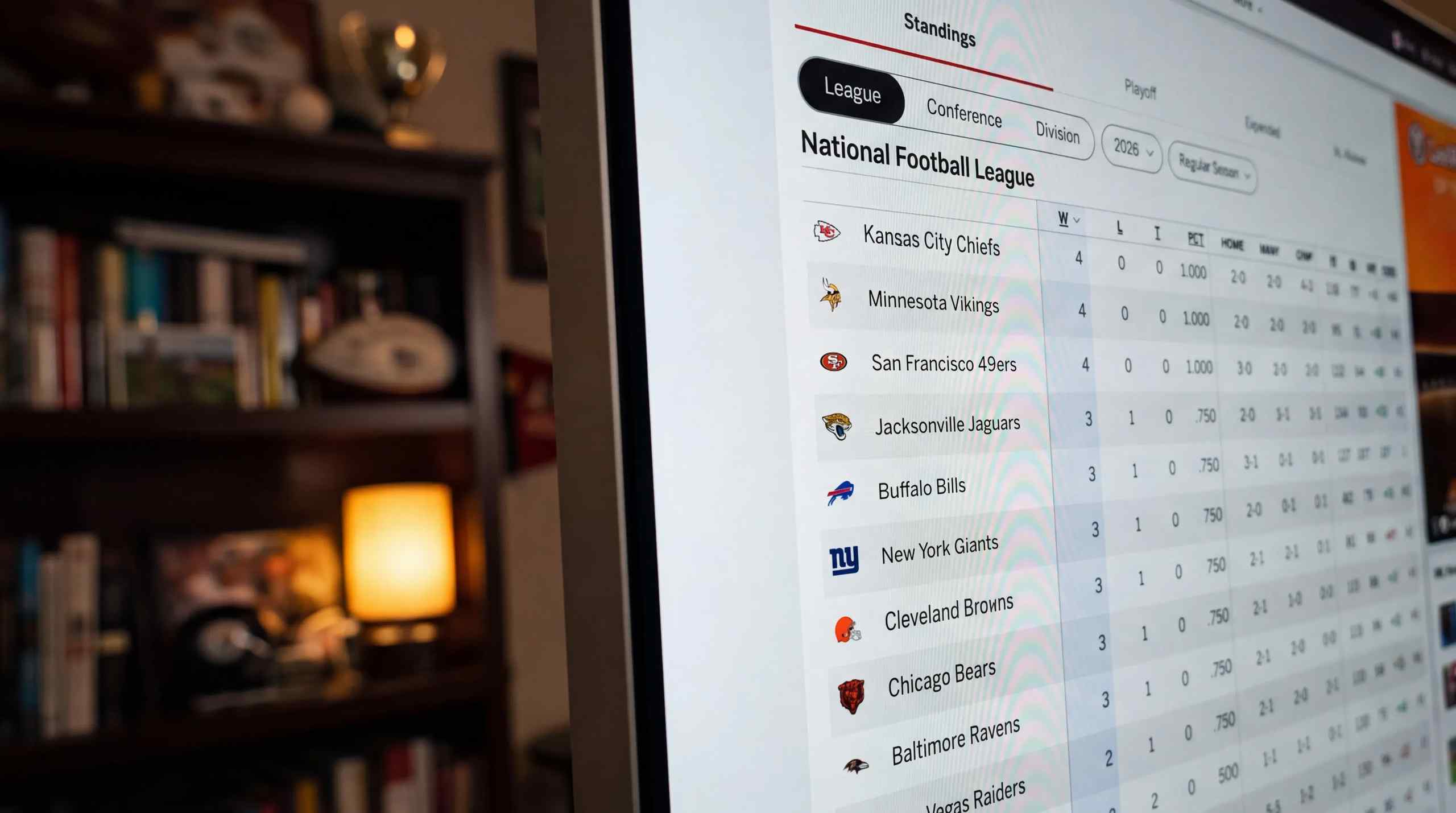
Does a 4-0 NFL Start Mean You're Playoff Bound?
A 4-0 start can put your team on the fast track to the playoffs, but history shows that even Super Bowl champions don't always start strong.
By Marcus Mosher